
Article Plan: Earth Science Guided Reading Study Workbook Answers
This article details resources for mastering Earth Science workbooks. It explores Google Earth Pro’s compatibility with Linux distributions like Ubuntu and Fedora, alongside official help centers.
Earth Science guided reading study workbooks are invaluable tools for students navigating the complexities of our planet. These resources aren’t simply repositories of questions; they are structured pathways designed to reinforce learning and cultivate a deeper understanding of Earth’s systems. They bridge the gap between textbook concepts and practical application, encouraging active recall and critical thinking.
The availability of diverse versions of Google Earth – desktop, web, and mobile – mirrors the accessibility of these workbooks. Just as workbooks cater to different learning styles, Google Earth offers varied platforms for visualization. Understanding the interplay between these tools is key. Workbooks often present scenarios that can be vividly explored using Google Earth Pro, particularly its 3D mapping capabilities.
Furthermore, official Google Earth help centers, available in multiple languages, provide supplementary support, much like answer keys and detailed explanations within the workbooks. These resources empower students to independently verify their understanding and explore concepts beyond the confines of assigned readings. The goal is not just to find the ‘right’ answer, but to grasp the underlying scientific principles.
Understanding Guided Reading in Earth Science
Guided reading in Earth Science isn’t passive absorption of facts; it’s an interactive process. It involves students actively engaging with text, predicting outcomes, questioning assumptions, and summarizing key information. Workbooks facilitate this by posing targeted questions that prompt deeper analysis, moving beyond simple memorization.
This approach aligns with the exploratory nature of Earth Science itself. Just as Google Earth Pro allows users to virtually navigate and investigate our planet, guided reading encourages students to ‘explore’ scientific concepts. Utilizing 3D maps and terrain models, accessible through Google Earth, can visually reinforce concepts presented in the workbook.
The effectiveness of guided reading hinges on utilizing resources like official Google Earth help centers. These centers, offering tutorials and answers to frequently asked questions, mirror the support provided by detailed workbook solutions. Students learn to independently troubleshoot and verify their understanding, fostering a sense of ownership over their learning. It’s about building skills, not just completing assignments.
The Role of Study Workbooks in Earth Science Education
Earth Science study workbooks serve as crucial bridges between classroom instruction and independent understanding. They provide structured practice, reinforcing concepts like plate tectonics, weathering, and the intricacies of Earth’s systems. These workbooks aren’t merely repositories of questions; they’re tools for developing critical thinking skills.
Their value is amplified when integrated with visual resources like Google Earth Pro. Students can apply workbook knowledge to real-world scenarios, exploring geographical features and phenomena in 3D. Accessing official Google Earth help centers provides supplementary learning, mirroring the detailed answer keys often found in workbooks.
Furthermore, workbooks cater to diverse learning styles. Whether through multiple-choice questions, true/false assessments, or short-answer prompts, they offer varied avenues for demonstrating comprehension. Utilizing platforms like Google Earth alongside workbooks transforms learning from abstract to concrete, fostering a deeper, more lasting grasp of Earth Science principles.
Common Earth Science Topics Covered
Earth Science workbooks consistently address core areas like plate tectonics and continental drift, exploring the forces shaping our planet. Weathering, erosion, and deposition – the processes altering Earth’s surface – are also fundamental. A significant portion focuses on rocks and mineral identification, demanding observational skills and understanding of geological classifications.
Beyond these, workbooks delve into Earth’s atmosphere, examining weather patterns and climate. The hydrosphere, encompassing the water cycle and oceans, receives substantial coverage. Students grapple with the lithosphere’s structure and composition, understanding the layers beneath our feet.
These topics often benefit from visualization tools like Google Earth Pro, allowing students to observe geological formations and atmospheric phenomena firsthand. Official Google Earth resources provide supplementary information, enriching workbook exercises. Mastering these concepts requires not just memorization, but application – a skill honed through guided reading and practical exploration.
Plate Tectonics and Continental Drift
Earth Science workbooks dedicate significant attention to plate tectonics, the theory explaining Earth’s lithospheric movements. Students learn about different plate boundaries – convergent, divergent, and transform – and the geological events associated with each, like earthquakes and volcanic eruptions.

Continental drift, the precursor to plate tectonics, is explored, detailing Alfred Wegener’s evidence: fossil distribution, matching coastlines, and similar rock formations across continents. Workbooks often present diagrams illustrating plate interactions and the formation of mountain ranges.
Understanding these concepts is enhanced by visualizing plate boundaries using tools like Google Earth Pro, observing real-world examples of tectonic activity. Official Google Earth resources offer 3D models and terrain views, aiding comprehension. Guided reading questions challenge students to analyze evidence and predict geological outcomes, solidifying their grasp of these fundamental Earth Science principles.
Weathering, Erosion, and Deposition
Earth Science workbooks thoroughly cover weathering, erosion, and deposition – the processes shaping Earth’s surface. Students differentiate between physical and chemical weathering, learning how factors like climate and rock type influence these processes. Erosion, the transport of weathered materials, is examined through agents like water, wind, and ice.
Workbooks present scenarios illustrating landform development through deposition, such as the formation of deltas, sand dunes, and sedimentary rock layers. Diagrams and illustrations demonstrate these processes, often accompanied by guided reading questions assessing understanding of cause-and-effect relationships.
Google Earth Pro proves invaluable for visualizing real-world examples of these forces. Students can observe canyons carved by rivers, coastlines reshaped by wave action, and glacial deposits. Utilizing official Google Earth resources, including 3D terrain models, enhances comprehension and provides a dynamic learning experience, reinforcing workbook concepts.
Rocks and Minerals Identification
Earth Science workbooks dedicate significant sections to rock and mineral identification, a cornerstone of the discipline. Students learn to classify minerals based on properties like hardness (Mohs scale), luster, streak, and cleavage. Igneous, sedimentary, and metamorphic rocks are explored, focusing on their formation processes and characteristic textures.
Workbook exercises often involve identifying minerals and rocks from descriptions or images, requiring careful observation and application of learned criteria. Flowcharts and identification keys are common tools. Understanding the rock cycle is crucial, and workbooks typically include diagrams illustrating its interconnectedness.
Google Earth Pro can supplement this learning by showcasing geological formations and mineral-rich areas globally. Exploring 3D maps reveals rock outcrops and geological structures. Official Google Earth resources provide access to geographical data, aiding in understanding the context of rock and mineral occurrences, enhancing workbook study.
Types of Questions in Earth Science Workbooks
Earth Science guided reading workbooks employ diverse question formats to assess comprehension. Multiple-choice questions test recall and application of concepts, often requiring students to differentiate between similar ideas. True/False questions demand critical thinking to evaluate statements’ accuracy, prompting justification for answers.
Short answer questions necessitate concise explanations, reinforcing understanding of key terms and processes. Essay questions challenge students to synthesize information, construct arguments, and demonstrate in-depth knowledge. Workbooks frequently include labeling diagrams, interpreting graphs, and analyzing data sets.
Effective strategies involve careful reading of questions, identifying keywords, and eliminating incorrect options. Utilizing Google Earth Pro can visually clarify concepts tested in these questions. Exploring 3D terrain models and geographical data enhances understanding, aiding in accurate responses and deeper engagement with the material.
Multiple Choice Questions & Strategies
Multiple-choice questions are prevalent in Earth Science workbooks, assessing understanding through a selection of answers. A key strategy is to read the question carefully, identifying the core concept being tested. Eliminate obviously incorrect options first, narrowing down the choices.
Pay attention to keywords and qualifiers within the question and answer options – words like “always,” “never,” or “except” can significantly alter meaning. If unsure, try to rephrase the question and answer choices in your own words. Consider each option as a true statement individually before comparing it to the question.
Utilizing Google Earth Pro can aid in visualizing concepts tested in these questions, particularly those relating to geographical features or spatial relationships. Official help centers offer tutorials, enhancing comprehension. Remember, process of elimination is a powerful tool, even when certainty is lacking.
True/False Questions & Critical Thinking
True/False questions in Earth Science workbooks demand meticulous attention to detail. A single incorrect word can render an entire statement false. Approach these questions with skepticism; assume the statement is false until proven true by your knowledge.
Critical thinking is paramount. Don’t simply recall facts; analyze the statement’s logic and underlying principles. Look for absolute terms like “always” or “never,” as these often indicate a false statement. Consider exceptions or nuances to the general rule presented.
Google Earth Pro can be invaluable for verifying geographical or geological claims made in these statements. Exploring 3D maps and terrain models can confirm or refute assertions about landforms or spatial relationships. Utilize official help resources to deepen your understanding of complex Earth Science concepts, bolstering your critical evaluation skills.
Short Answer & Essay Questions – Detailed Responses
Short answer and essay questions in Earth Science require more than rote memorization; they demand comprehensive understanding and articulate expression. Begin by carefully dissecting the question, identifying key terms and concepts. Construct a clear, concise thesis statement for essay questions, outlining your main argument.
Support your answers with specific examples and evidence from your studies. Don’t hesitate to utilize diagrams or sketches to illustrate complex processes. Google Earth Pro can be a powerful tool for visualizing geographical phenomena, enhancing the clarity and impact of your responses.
Referencing official Google Earth help centers can provide accurate data and terminology. Remember to demonstrate critical thinking by acknowledging multiple perspectives or potential limitations. Thoroughly proofread your work for grammatical errors and clarity, ensuring a polished and persuasive presentation of your knowledge.
Specific Workbook Sections & Answer Approaches

Earth Science workbooks often categorize sections by core concepts – atmosphere, hydrosphere, and lithosphere. Approach atmospheric studies by focusing on weather patterns and climate zones, utilizing Google Earth’s visualization of cloud formations and temperature variations. Hydrosphere sections benefit from understanding the water cycle; explore ocean currents and landforms with Google Earth Pro’s 3D terrain models.
Lithosphere questions demand knowledge of plate tectonics and rock formations. Leverage Google Earth’s mapping capabilities to identify geological features and fault lines. When encountering questions about specific locations, utilize the platform’s search function and explore available imagery;
Remember to consult official Google Earth help resources for accurate geographical data. Always cross-reference workbook information with external sources to ensure a comprehensive understanding and well-supported answers.
Earth’s Atmosphere and Weather Patterns
Earth Science workbooks frequently assess understanding of atmospheric layers, air pressure, and global wind systems. Utilize Google Earth Pro to visualize weather fronts and track storm systems in real-time, enhancing comprehension of dynamic weather patterns. Explore how temperature variations influence air movement and precipitation.
When addressing questions about climate zones, leverage Google Earth’s imagery to observe distinct biomes and geographical features associated with each zone. Consider how latitude and altitude impact temperature and precipitation levels.
For questions concerning atmospheric composition, refer to official Google Earth resources and supplementary materials. Remember to analyze data presented in workbooks critically, and cross-reference with external sources for a holistic understanding of Earth’s complex atmospheric processes.
Earth’s Hydrosphere: Water Cycle and Oceans
Earth Science workbooks often focus on the intricacies of the water cycle – evaporation, condensation, precipitation, and runoff. Google Earth Pro provides a powerful tool to visualize large-scale hydrological features like river systems, lakes, and ocean currents. Observe how these elements interact and contribute to global water distribution.
When tackling questions about ocean salinity, temperature, and density, utilize Google Earth’s oceanographic data layers (if available) to analyze spatial variations. Consider the impact of these factors on marine life and ocean circulation patterns.
For questions related to coastal erosion and deposition, examine satellite imagery within Google Earth to identify areas affected by these processes. Supplement workbook information with official Google Earth help resources for a comprehensive understanding of Earth’s hydrosphere.
Earth’s Lithosphere: Structure and Composition
Earth Science workbooks frequently explore Earth’s internal layers – crust, mantle, and core – and their composition. Google Earth Pro excels at visualizing surface features indicative of underlying geological structures, such as mountain ranges, rift valleys, and volcanic formations.

When answering questions about plate boundaries and associated geological events, leverage Google Earth’s 3D terrain models to understand the spatial relationships between tectonic plates. Explore how these interactions cause earthquakes, volcanic eruptions, and mountain building.

Utilize the platform to examine different rock types and geological formations across various regions. Supplement workbook studies with information from the official Google Earth help center regarding terrain models and 3D building visualizations. This enhances comprehension of the lithosphere’s complex structure and composition.
Utilizing Online Resources for Answer Verification
Earth Science guided reading often requires confirming answers with reliable sources. The official Google Earth Help Center, available in multiple languages, provides tutorials and answers to frequently asked questions, aiding in understanding complex concepts.

Beyond the workbook, Google Earth Pro itself serves as a powerful verification tool. Cross-reference textbook descriptions of geographical features with the platform’s 3D visualizations. This confirms understanding of landforms, plate tectonics, and weather patterns.
Explore official support resources for Ubuntu and Fedora, ensuring Google Earth Pro functions optimally for research. Remember that various language-specific help centers (Spanish, Portuguese, German, Polish, Russian, Finnish) exist, offering localized support. Always prioritize official documentation for accurate answer verification and deeper comprehension.
Google Earth Pro for Visualizing Concepts
Google Earth Pro dramatically enhances comprehension of Earth Science concepts presented in guided reading workbooks. Its ability to display 3D terrain models and geographical data transforms abstract ideas into tangible visualizations.
Students can actively explore plate boundaries, observe weathering and erosion patterns, and analyze the impact of geological processes – all directly linked to workbook content. The software’s compatibility with Linux distributions like Ubuntu and Fedora expands accessibility for diverse learners.

Utilize the platform to verify textbook descriptions of landforms, ocean currents, and atmospheric phenomena. Explore different image types and layers to gain a holistic understanding. Remember to consult the official Google Earth Help Center for tutorials on navigating the interface and maximizing its educational potential. This interactive approach solidifies knowledge beyond rote memorization.
Official Google Earth Help Centers (Multiple Languages)

Google Earth provides comprehensive support through its official Help Centers, available in numerous languages. These resources are invaluable when tackling challenging questions within Earth Science guided reading workbooks. They offer tutorials, troubleshooting guides, and answers to frequently asked questions, ensuring users can effectively utilize the software’s features.
Whether you need assistance navigating the 3D globe, understanding terrain models, or exploring different map layers, the Help Center provides clear instructions. Support is available for desktop, web, and mobile versions, catering to diverse learning environments. Resources exist for Ubuntu and Fedora Linux users, addressing compatibility concerns.
Beyond English, find assistance in languages like Spanish, Portuguese, German, Polish, and Russian. This multilingual support broadens accessibility and empowers students worldwide to enhance their Earth Science understanding using Google Earth.
Exploring 3D Maps and Terrain Models
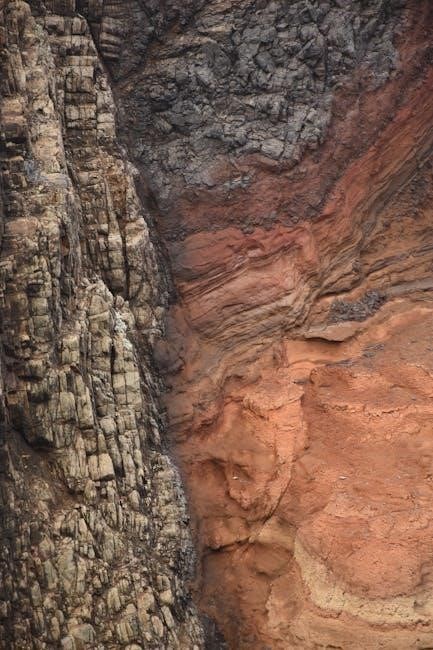
Google Earth Pro excels at visualizing Earth Science concepts through immersive 3D maps and detailed terrain models. These features are incredibly helpful when answering questions in guided reading study workbooks, particularly those relating to landforms, plate tectonics, and geographical features.

Students can explore mountains, valleys, and ocean trenches in realistic detail, gaining a deeper understanding than traditional 2D maps allow. Examining 3D building models provides context for urban geography and human impact on the environment. The software’s ability to simulate different perspectives aids in comprehending spatial relationships.
Utilizing these visual tools enhances comprehension of complex processes like weathering, erosion, and deposition. Google Earth’s terrain models allow students to analyze topographic features and understand how they influence natural phenomena. This interactive exploration complements textbook learning and strengthens problem-solving skills.